|
LINUX |
|
Communication Consultants |
|
Paul Colmer & Associates |







|
Linux refers to the family of Unix-like computer operating systems using the Linux kernel. Linux can be installed on a wide variety of computer hardware, ranging from mobile phones, tablet computers and video game consoles, to mainframes and supercomputers. Linux is the leading server OS, accounting for more than 50% of installations and runs the top 90% of the fastest supercomputers in the world. Desktop use of Linux has increased in recent years, partly owing to the popular Ubuntu, distributions and the emergence of netbooks and smart phones running an embedded Linux. The development of Linux is one of the most prominent examples of free and open source software collaboration; typically all the underlying source code can be used, freely modified, and redistributed, both commercially and non-commercially, by anyone under licenses such as the GNU General Public License. Typically Linux is packaged in a format known as a Linux distribution for desktop and server use. Linux distributions include the Linux kernel and all of the supporting software required to run a complete system, such as utilities and libraries, the X Window System, the GNOME and KDE desktop environments, and the Apache HTTP Server. Commonly used applications with desktop Linux systems include the Mozilla Firefox web-browser, the OpenOffice.org office application suite and the GIMP image editor. The name "Linux" comes from the Linux kernel, originally written in 1991 by Linus Torvalds. The main supporting user space system tools and libraries from the GNU Project (announced in 1983 by Richard Stallman) are the basis for the Free Software Foundation's preferred name GNU/Linux. |
|
Richard Stallman |
|
Linus Torvalds |
Current development
Torvalds continues to direct the development of the kernel. Stallman heads the Free Software Foundation, which in turn supports the GNU components. Finally, individuals and corporations develop third-party non-GNU components. These third-party components comprise a vast body of work and may include both kernel modules and user applications and libraries. Linux vendors and communities combine and distribute the kernel, GNU components, and non-GNU components, with additional package management software in the form of Linux distributions. Desktop
The popularity of Linux on standard desktops (and laptops) has been increasing over the years. Currently most distributions include a graphical user environment. The two most popular such environments are GNOME and KDE, both of which are mature and support a wide variety of languages. The performance of Linux on the desktop has been a controversial topic; for example in 2007 Con Kolivas accused the Linux community of favouring performance on servers. He quit Linux kernel development because he was frustrated with this lack of focus on the desktop, and then gave a "tell all" interview on the topic. Since then a significant effort has been expended improving the desktop experience. Projects such as upstart aim for a faster boot time. There are several companies that do port their own or other companies' games to Linux. |
|
Many types of applications available for Microsoft Windows and Mac OS X are also available for Linux. Commonly, either a free software application will exist which does the functions of an application found on another operating system, or that application will have a version that works on Linux (such as Skype). Furthermore, the Wine project provides a Windows compatibility layer to run unmodified Windows applications on Linux. CrossOver is a proprietary solution based on the open source Wine project that supports running Windows versions of Microsoft Office, Intuit applications such as Quicken and QuickBooks, Adobe Photoshop versions through CS2, and many popular games such as World of Warcraft and Team Fortress 2. In other cases, where there is no Linux port of some software in areas such as desktop publishing and professional audio, there is equivalent software available on Linux. Many popular applications are available for a wide variety of operating systems. For example Mozilla Firefox, and OpenOffice.org have downloadable versions for all major operating systems. Furthermore, some applications were initially developed for Linux (such as Pidgin, and GIMP) and, due to their popularity, were ported to other operating systems (including Windows and Mac OS X). A growing number of proprietary desktop applications are also supported on Linux; see List of proprietary software for Linux. In the field of animation and visual effects, most high end software, such as AutoDesk Maya, Softimage XSI and Apple Shake, is available for Linux, Windows and/or Mac OS X. The collaborative nature of free software development allows distributed teams to perform language localization of some Linux distributions for use in locales where localizing proprietary systems would not be cost-effective. For example the Sinhalese language version of the Knoppix distribution was available significantly before Microsoft Windows XP was translated to Sinhalese. In this case the Lanka Linux User Group played a major part in developing the localized system by combining the knowledge of university professors, linguists, and local developers. Installing new software in Linux is typically done through the use of package managers such as Synaptic Package Manager, PackageKit, and Yum Extender. While major Linux distributions have extensive repositories (tens of thousands of packages), not all the software that can run on Linux is available from the official repositories. Alternatively, users can install packages from unofficial repositories, download pre-compiled packages directly from websites, or compile the source code by themselves. All these methods come with different degrees of difficulty, compiling the source code is in general considered a challenging process for new Linux users, but it's hardly needed in modern distributions. |
|
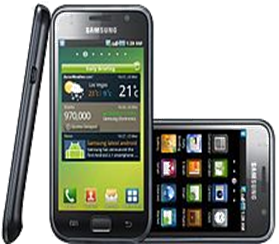
A Samsung Galaxy S running Android |
|
Embedded devices Due to its low cost and ease of modification, an embedded Linux is often used in embedded systems. Android, which is based on a modified version of the Linux kernel, has become a major competitor of Symbian OS which is used in the majority of smart phones — 25.5% of smart phones sold worldwide during Q3 2010 were using Android (Linux variations accounted for 27.6% in total) Cell phones or PDAs running on Linux and built on open source platform became a trend from 2007, like Nokia N810, Openmoko's Neo1973, Motorola RAZR2 v8, Motorola ROKR E8, Motorola MING series, Motorola ZINE and Google Android with a modified Linux Kernel . The popular TiVo digital video recorder uses a customized version of Linux. Several network firewall and router standalone products, including several from Cisco/Linksys, use Linux internally, using its advanced firewall and routing capabilities. The Korg OASYS and the Yamaha Motif XS music workstations, Yamaha S90XS/S70XS synthesizers, Yamaha Motif-Rack XS tone generator module, and Roland RD-700GX digital piano also run Linux. Furthermore, Linux is used in the leading stage lighting control system, FlyingPig/HighEnd WholeHogIII Console. |
GNU/Linux
The Free Software Foundation views Linux distributions which use GNU software as GNU variants and they ask that such operating systems be referred to as GNU/Linux or a Linux-based GNU system. The media and common usage, however, refers to this family of operating systems simply as Linux, as do many large Linux distributions (e.g. Ubuntu, SuSE Linux or Mandriva Linux). Some distributions use GNU/Linux (particularly notable is Debian GNU/Linux, on which Ubuntu is based), but the term's use outside of the enthusiast community is limited. The naming issue remains controversial. 20th year anniversary of Linux 2011 We have a winner in the 20 year battle for operating system dominance. Well, almost... It's been 20 years since a geek from Helsinki first started dabbling with an operating system known as Linux. For many of those 20 years the upstart open source operating system has been seen as a potential Windows killer. So, on this anniversary, where do we stand? Fans will tell you that Linux is one of the most dominant operating systems in the world and is showing signs of being a clear winner. Microsoft fans will tell you the exact opposite. In a sense, they are both right. Over the past 20 years Linux has developed to a point where it not only has a presence in just about every IT market that exists but actually dominates many of those sectors. It is dominant on the web, it is becoming increasingly dominant in mobile devices thanks to Android, it underpins an ever-increasing array of consumer devices from GPSes to set-top boxes, and is part of almost all new emerging technologies. Linux also dominates the supercomputer market, with more than 90% of the world's top 500 supercomputers running Linux. Yet ask an average PC user what Linux is and you're likely to be greeted with a confused look. That's because most desktop PC users know only Windows. The idea that there is anything other than Windows to run on a PC is unimaginable to them. Which is why Microsoft would be right in saying that its Windows is dominant. Kicking a puppy Jim Zemlin, director of the Linux Foundation, is pretty pleased with the progress of Linux and is blunt in his assessment of Microsoft: "I think we just don't care that much [about Microsoft] anymore. They used to be our big rival, but now it's kind of like kicking a puppy." Linux developer Jeff Hoogland is a little more pragmatic about the success of Linux in his response to Zemlin's comments: "If Microsoft is a puppy, then it is one that has eaten all the desert in the house." Various statistics exist on the relative market shares of operating systems and while there are variations because of methodology, the harsh reality for Linux is inescapable. NetApplications, for example, reports that Windows accounts for almost 90% (89.58% to be precise) of the global operating system market share. With 5% of the remaining portion being taken up by Apple, there is a scant 5% remaining for everyone else. Among them is Linux with just shy of a 1% share. No matter what store you put in these various statistics the truth is that Linux is just a bit player in the desktop operating system market. The good news for Linux fans, however, is that the real growth in the market right now is in mobile and that is an area where there are really only two players at this time: Apple and Linux. Linux, through Android primarily, is getting stronger by the day. Microsoft, on the other hand, is just a marginal player in the mobile space at this time. Microsoft's mobile smart phone OS share for 2010 was just 4.2% while Android's was close to 23%. We believe that Android could reach 50% market share by 2012. |


|
Home |



|
About Us |


|
Open Source |

|
Linux |


|
Asterisk |
|
CRM |

|
Ubuntu |

|
Bye, Bye Microsoft |

|
Service List |

|
Product List |

|
Case studies |

|
News Article |

|
Contact Us |
|
About Us |

|
Home |
|
Recruitment services |